
There’s a moment—some headline, some shaky video, some furious comment thread—when your heart starts racing and your thumb starts scrolling. The news cycle spins up, civil strife dominates the feed, and before you know it you’ve fallen down a rabbit hole lined with outrage and hot takes. You came for information; you stayed for adrenaline. And afterward you feel… worse.
Here’s the truth most of us learn the hard way: when chaos flares, the healthiest move isn’t to dive deeper—it’s to step back. The negative waves will crest and recede. You don’t need to spend your presence on every surge.
This isn’t about denial or apathy. It’s about protecting your nervous system so you can be useful, kind, and clear when it actually matters.
The Cost of “Staying Informed” 24/7
“Staying informed” sounds noble, but it can become a cover for compulsive doomscrolling. Your brain isn’t built to process a constant drip of crisis. Every alarming headline triggers a mini stress response—tight shoulders, shallow breath, a twitchy need to refresh for the next hit. Keep that loop running long enough and you start living inside someone else’s emergency.
Meanwhile, the most important parts of your life—relationships, creative work, health—get the exhausted, distracted version of you. That’s not “responsible citizenship.” That’s burnout in slow motion.
The Storm Will Pass (and It Doesn’t Need You to Hold It Up)
Most negative cycles are waves, not permanent states. Reporters move on. Algorithms shift. Public attention resets. The storm doesn’t need you holding vigil at 2 a.m. to keep the sky from falling. When you step away, nothing collapses—except your anxiety.
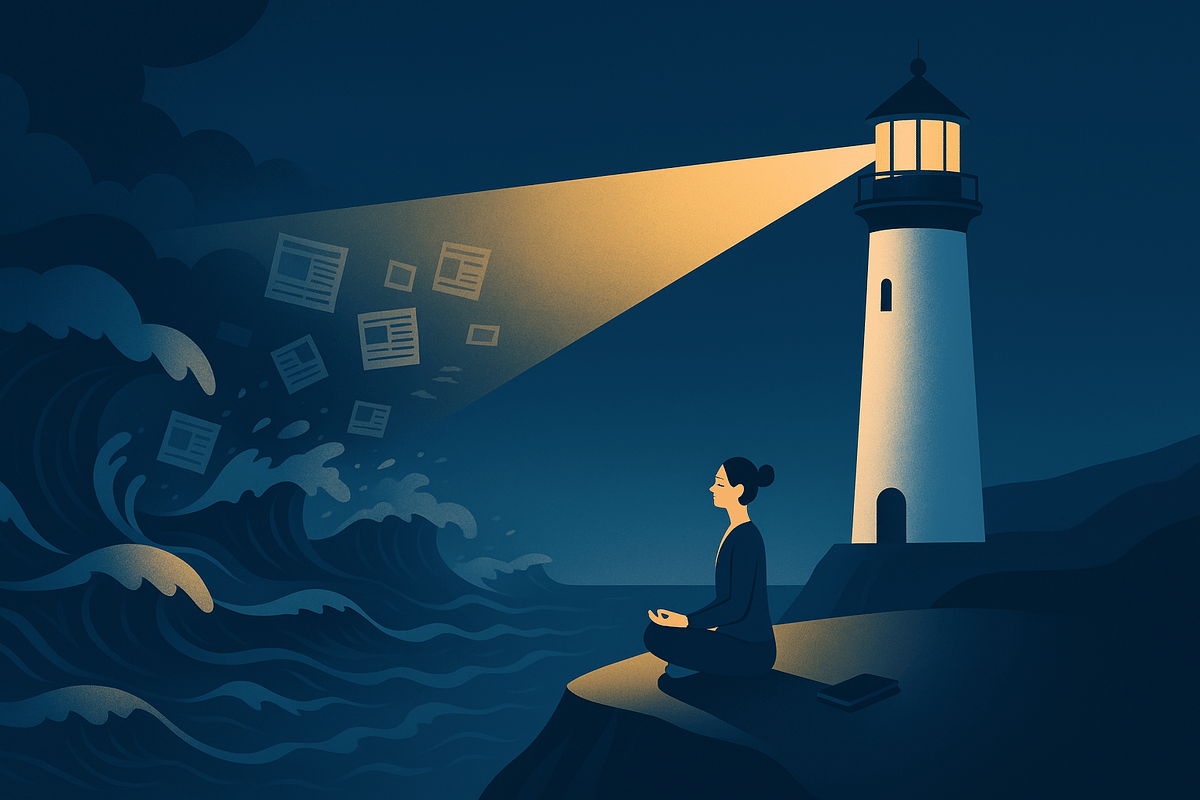
Think of yourself as a lighthouse, not a sponge. A lighthouse stays steady and useful because it doesn’t absorb every crashing wave. It keeps its light—your attention—clean and focused.
A Practical Plan to Avoid the Rabbit Hole
Try these tools the next time the world feels like it’s on fire:
Set news windows, not an open tap.
Pick one or two brief check-ins per day (say, 10 minutes late morning, 10 minutes early evening). Outside those windows, the news doesn’t get your attention.Use “push” responsibly.
Turn off breaking-news notifications. They aren’t breaking for your life 99% of the time. Choose one or two calm, credible sources and visit them on your schedule.Create a “contingency channel.”
If there’s something truly urgent (local safety, school closures), decide which single source you’ll check and when. Clarity beats compulsive refresh.Write a boundary script.
When friends or coworkers try to pull you into whirlpools of speculation, have a line ready:
“I’m limiting my news intake this week to keep my head clear. If there’s something I can do, send me the action steps.”Swap input for output.
After a short news window, do something that returns you to the driver’s seat: a walk, journaling, making lunch, calling someone you love. Action metabolizes anxiety.Choose one meaningful action—then stop.
Donate, call a representative, sign up to volunteer, check on a neighbor. Then consider your civic duty complete for today. More consumption won’t increase your impact.Protect your sleep like it’s sacred.
No news after dinner. Your nervous system needs a clear runway to land.
For Empaths and Highly Sensitive People
If you pick up energy like Wi-Fi, conflict-heavy news doesn’t just inform you—it inhabits you. That’s why you can feel wrung out after “only” twenty minutes of scrolling.
A simple reset:
Hand on heart, three slow breaths. Name what you’re feeling out loud. (“Sadness,” “fear,” “anger.”)
Release what isn’t yours. Visualize handing the story back to the world with love: “May this be resolved in the highest way possible. I will not carry it all.”
Re-root in your life. Touch something physical: plant, pet, mug of tea. Presence beats panic.
Questions to Keep You Grounded
Is this information useful or just agitating?
What, if anything, can I do about it today?
Will this still matter to my actual life in a week? A month?
How do I want to feel when I go to bed tonight—and what supports that feeling?
If an article fails those tests, it doesn’t earn your attention.
Build a Better Information Diet
Think of your mind like your body: what you consume becomes your state.
Whole foods: long-form articles, books, conversations with thoughtful people.
Processed snacks: hot-take threads and sensational clips.
Toxins: content designed to enrage and divide.
Aim for more “whole foods.” You’ll feel fuller with less.
What to Do Instead of Doomscrolling
Move your body—walk, stretch, lift.
Make or mend something with your hands.
Cook a simple meal.
Put on music that brightens your chest.
Step outside and name five things you see.
Text someone: Thinking of you. Anything you need?
Each one brings you back to a world you can touch.
When You Must Check In
Some seasons require awareness—wildfires, storms, local safety updates. Even then, keep it clean:
One trusted source.
One or two set check-ins.
One practical step if needed.
Then back to your life.
The Freedom on the Other Side
When you stop paying with your peace, you get your day back—your attention, creativity, patience, and humor. You become the person people turn to because you’re calm, not constantly spun up by the latest spin.
The news cycle will always try to sell you urgency. You don’t have to buy it. Let the storm pass without you standing in the rain. Keep your light steady. Guard your energy. Give your time to what you can touch and change.
That’s not avoiding reality. That’s choosing your reality.